

Do You Know the Advantages and Application Scenarios of Spiral Pile Anchors?
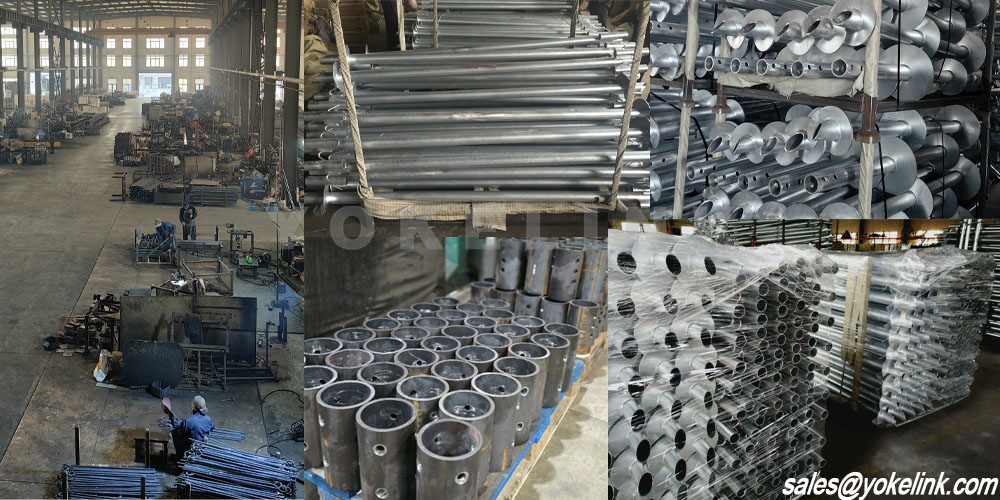
The core advantages of ground anchor screw piles are excavation-free installation, fast installation, and adaptability to a wide range of geological conditions. They are primarily used in scenarios requiring rapid fixation with minimal environmental impact. They can be categorized into two key areas: scenarios and advantages.
1.Helical Pile Core Application Scenarios
Ground anchor screw piles are applicable across a wide range of sectors, including energy, infrastructure, and temporary projects. Their core purpose is to address the low efficiency and significant environmental damage associated with traditional foundation construction.
Energy:
The most common applications include photovoltaic rack mounting, wind power transmission tower foundations, and small energy storage device anchoring. They are particularly well-suited for projects in complex terrain, such as photovoltaic sand control and mountainous photovoltaic projects, where concrete pouring is inconvenient.
Infrastructure and Transportation:
They are used for fixing the foundations of streetlight poles, traffic lights, and billboards, as well as for anchoring temporary construction fences and temporary bridges, meeting the needs of rapid construction and subsequent dismantling.
Architecture and Landscape:
They can be used as ground pile foundations for light steel structures, as anchors for outdoor pavilions and grape trellises, and as anchors for greenhouse frames, avoiding soil damage. Emergency and Temporary Projects: They can quickly secure emergency tents and temporary command sheds, as well as reinforce flood control embankments and temporary drainage facilities, allowing for rapid commissioning in inclement weather.
2.Helical Pile Key Advantages
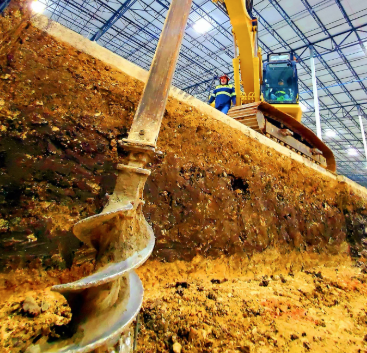
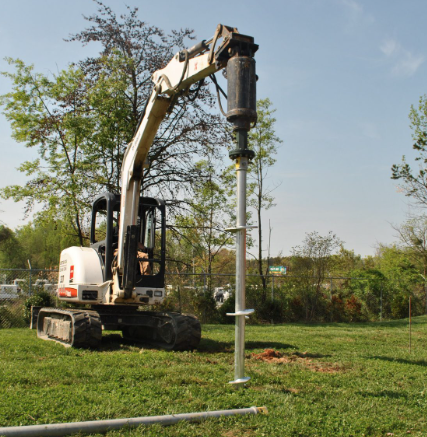
Compared to traditional concrete foundations and precast piles, ground-anchor screw piles offer advantages in efficiency, environmental friendliness, and adaptability.
High Construction Efficiency:
No excavation or waiting for concrete to set is required; they can be driven into the ground using mechanical screwing. The installation time for a single pile is typically 10-30 minutes, reducing the overall construction period by over 50%.
Low Environmental Impact:
The "trenchless" process eliminates the generation of large amounts of earthwork and construction waste, protecting surface vegetation and soil structure. It is particularly suitable for ecologically sensitive areas or farmland.
Strong Geological Adaptability:
By adjusting the blade diameter, pitch, and pile length, they can be used in a variety of soil types, including clay, sand, and loess, and can even be used in areas with high groundwater levels. High flexibility in future projects: If the project needs to be relocated or the site reused, the spiral piles can be mechanically reversed and recovered, avoiding land waste caused by foundation residue and reducing secondary development costs.
Stable bearing capacity: The spiral blades have a large contact area with the soil, providing strong pull-out and compressive resistance, ensuring the stability of equipment or structures in severe weather such as strong winds, rain, and snow.