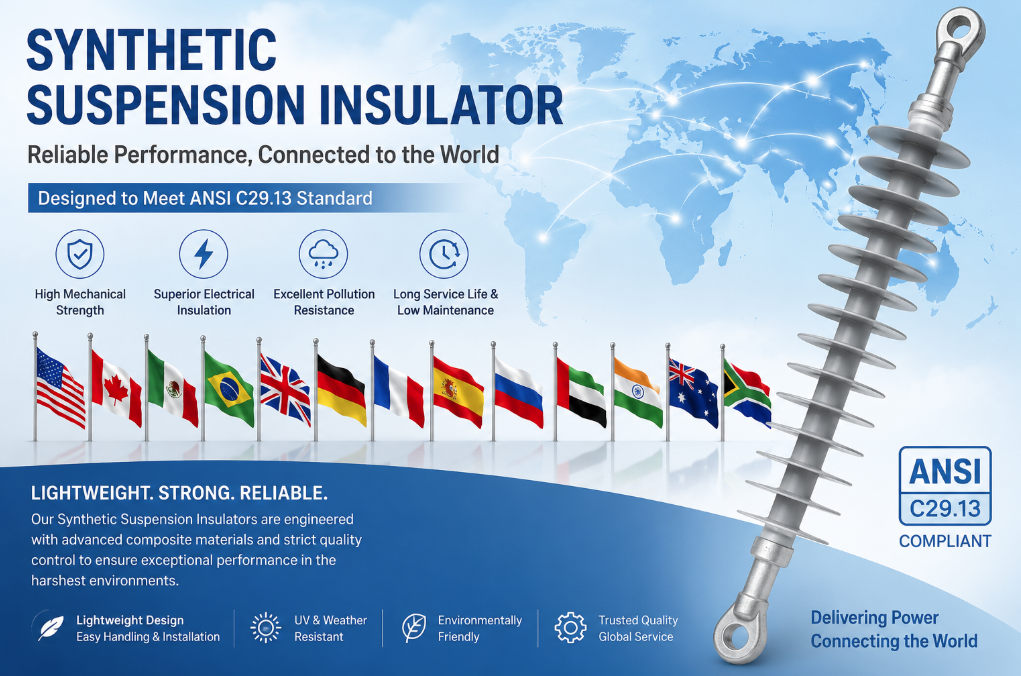
ANSI C29.13 Synthetic Suspension Insulators Deliver Reliable Performance for Modern Power Transmission
As power utilities continue to modernize transmission infrastructure and improve grid reliability, ANSI C29.13 Synthetic Suspension Insulators are playing an increasingly important role in overhead power transmission systems. Engineered to meet the requirements of the ANSI C29.13 standard, these advanced polymer insulators provide outstanding mechanical strength, electrical insulation, and long-term durability for high-voltage applications.
Meeting the ANSI C29.13 Standard
ANSI C29.13 establishes the performance requirements and testing procedures for synthetic suspension insulators
used in overhead transmission lines. Compliance with this standard ensures that insulators are capable of withstanding demanding electrical and mechanical stresses while maintaining reliable performance throughout their service life.
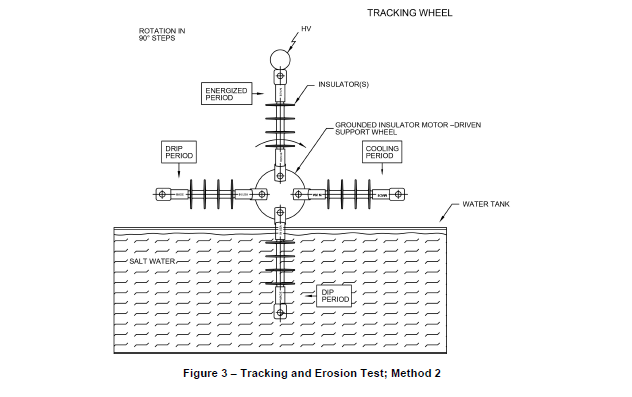
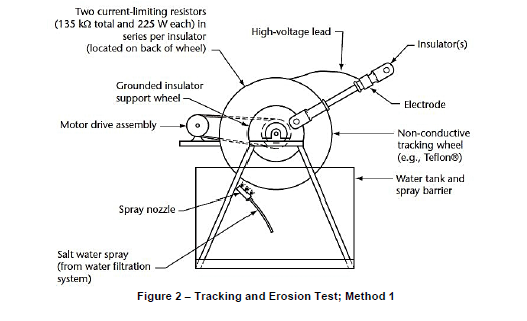
Manufacturers design ANSI C29.13 compliant synthetic suspension insulators to undergo comprehensive testing, including mechanical load verification, electrical withstand testing, environmental aging evaluation, and routine quality inspections. These rigorous procedures help ensure consistent product quality and dependable operation in various environmental conditions.
Advanced Composite Construction
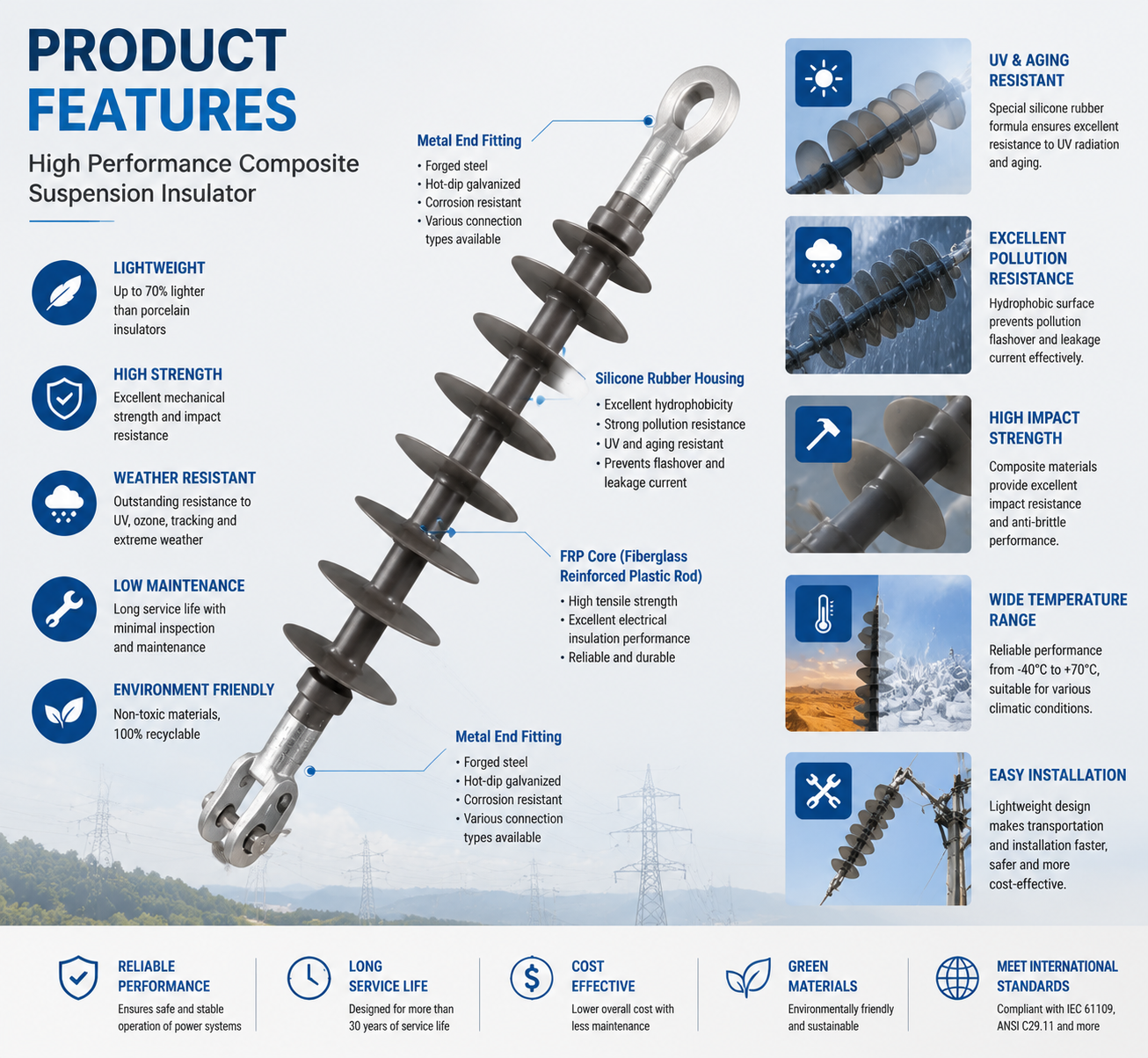
ANSI C29.13 Synthetic Suspension Insulators feature a lightweight composite design that combines a high-strength fiberglass reinforced polymer (FRP) core rod, premium silicone rubber housing, and corrosion-resistant metal end fittings.
The FRP core rod provides excellent tensile strength to support transmission line loads, while the silicone rubber housing offers superior hydrophobic properties that reduce leakage current and improve resistance to contamination. This combination enhances reliability in coastal regions, industrial areas, deserts, and locations exposed to severe weather conditions.
Improving Grid Reliability
Compared with conventional porcelain insulators, synthetic suspension insulators offer several important advantages:
Lightweight construction that simplifies transportation and installation
Excellent pollution flashover resistance
High mechanical strength and impact resistance
Superior resistance to ultraviolet radiation and weather aging
Reduced maintenance requirements and lower life-cycle costs
These benefits make ANSI C29.13 Synthetic Suspension Insulators an ideal choice for utilities seeking to improve system reliability while minimizing operational expenses.
Supporting Future Power Infrastructure
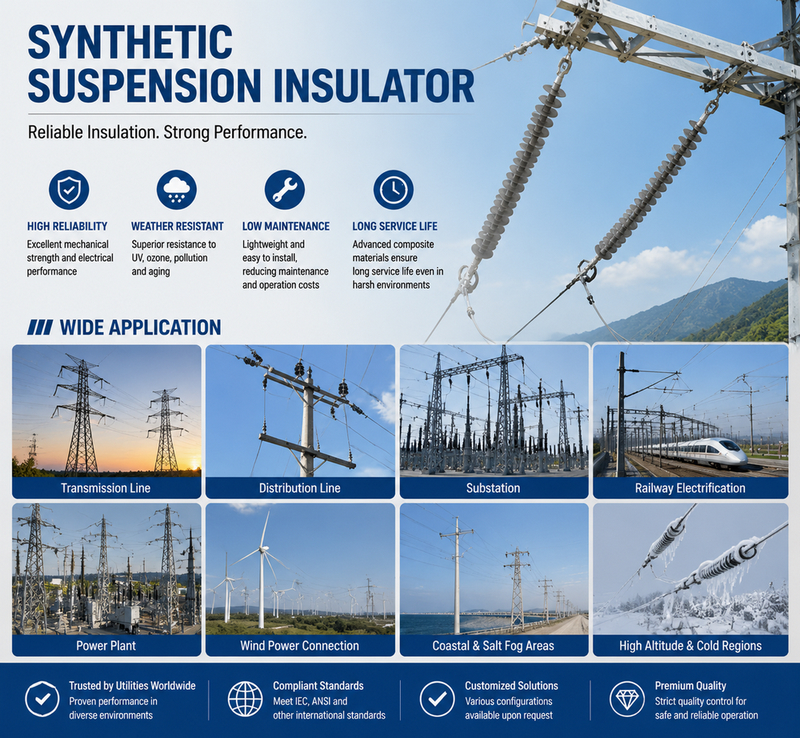
The growing integration of renewable energy, smart grid technologies, and long-distance transmission projects has increased the demand for reliable insulation solutions. Synthetic suspension insulators manufactured in accordance with ANSI C29.13 are widely used in transmission line construction, substation upgrades, and grid expansion projects throughout North America and international markets.
By combining advanced composite materials with strict manufacturing quality control, these insulators help utilities achieve safer operation, greater network efficiency, and long-term service performance.
Driving Innovation in Transmission Technology
As the global power industry continues to invest in resilient and sustainable infrastructure, ANSI C29.13 Synthetic Suspension Insulators remain an essential component of modern overhead transmission systems. Ongoing advancements in materials engineering and production technology are further improving product performance, supporting the reliable delivery of electricity for decades to come.
Continuous Innovation for Future Power Infrastructure
The evolution of composite insulation technology represents an important step toward safer, more efficient, and more sustainable electricity networks. Through advanced materials, improved manufacturing processes, and strict compliance with international standards such as IEC 61109, Composite Suspension Insulators continue to provide reliable solutions for the future of global power transmission.