Cross Arm Brace
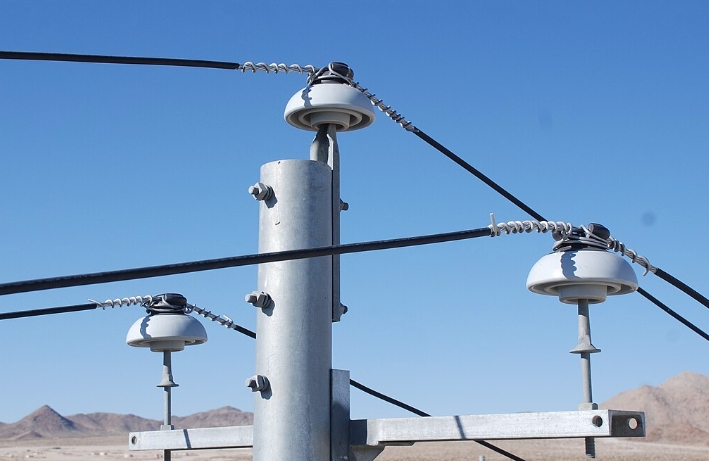
Yokelink cross arm bracket on the utility pole, as a key component supporting overhead wires in the power system, plays a vital role in ensuring the safety and stability of power transmission. Traditional cross arm brackets have some problems during installation and use, such as complex installation and easy rust of fasteners, which affect their performance and service life.
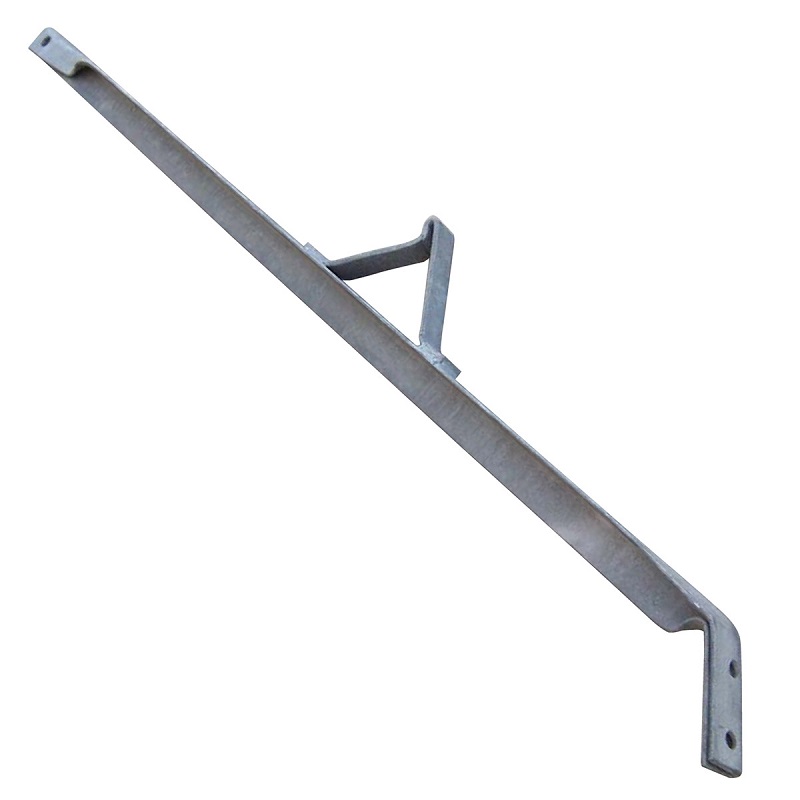
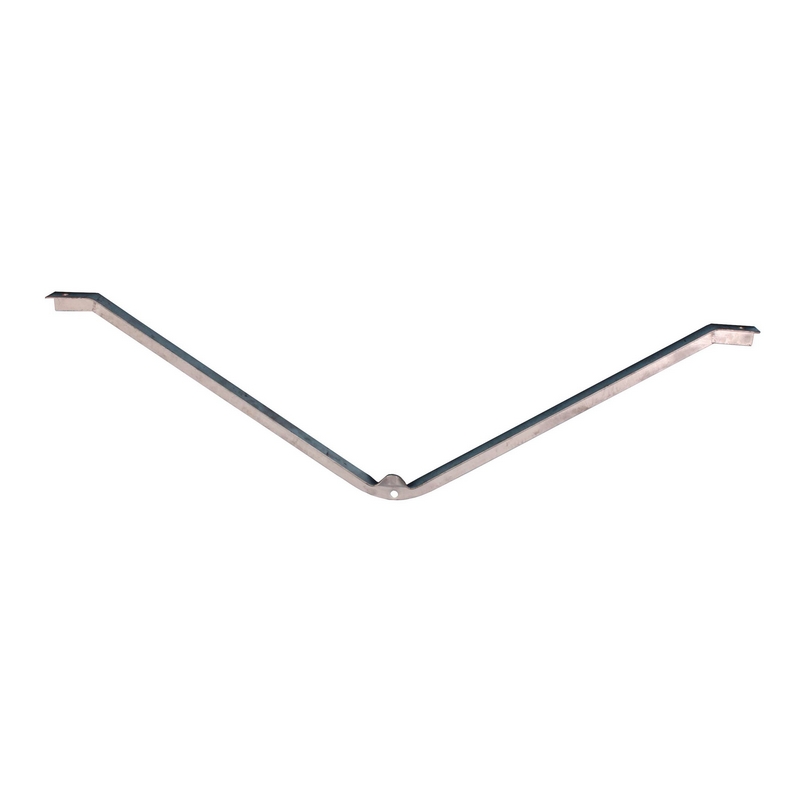
What is a Crossarm Brace?
The pole cross arm support is a key component that supports overhead wires in the power system.
The material standard usually uses steel (such as angle steel, channel steel, etc.), which must meet performance requirements such as high strength and corrosion resistance.
Its main purpose is to fix wires, share line loads, and ensure the safety and stability of power transmission. It is widely used in transmission line construction.

Do You Know Main Components of Crossarm Braces
Some of the main components of cross arm braces include:

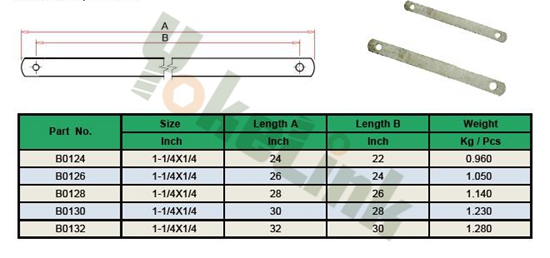
1. Flat bar with holes
Flat bars of the cross arm brace is the main components as they are responsible for holding and supporting the electrical cross-arm.
The holes on both ends allow the bolts to pass through and aid in attaching them to the pole.
The flat nature makes it easy to connect to the electrical cross arm and the pole.
2.Bolts and nuts
Nuts are types of fasteners that have threaded holes.
Their functionality involves the use of bolts to fasten and join different parts together.
They remain held together as the threads combine through friction, stretching, and compression.
Bolts are types of thread fasteners having a male thread on their exterior.
It is possible that you might confuse a bolt with a screw because they are closely related.
You will use a bolt with the aid of a nut to assemble different parts with no threads.
In cases where the connection might move around, the nut might become loose, so other locking mechanisms are employed.
The locking mechanisms employed include the use of jam nuts, lock washers, thread locking fluids, safety pins, and castellated nuts.
Crossarm Brace Material selection basis
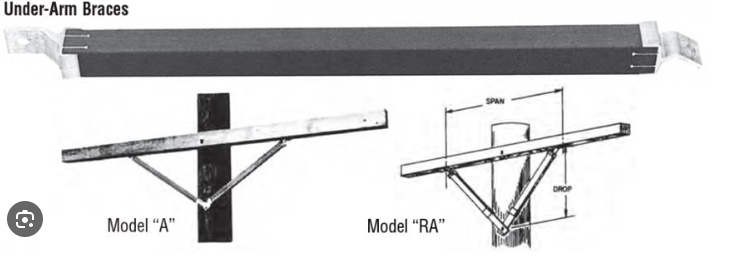
Use environment:
General environment: hot-dip galvanized steel is preferred (cost-effective).
Highly corrosive environment: stainless steel or FRP composite material is selected.
High insulation requirements: FRP composite material is selected (to avoid leakage risk).
Voltage level and load:
Low voltage, light load: angle steel (such as ∠50×5) or FRP cross arm can be used.
High voltage, heavy load: channel steel or Q345 high-strength angle steel, or even combined steel cross arm is required.
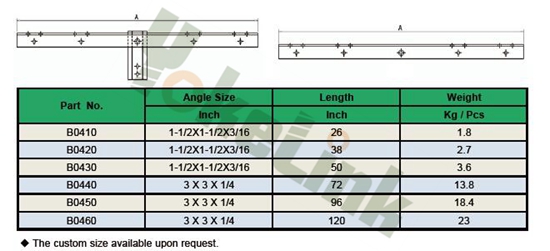
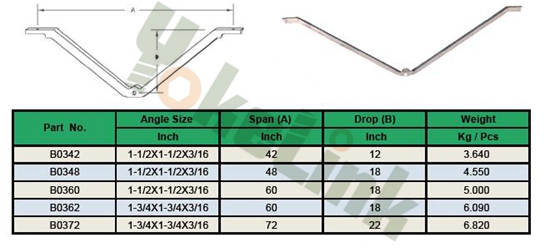
Yokelink Crossarm Brace Specification