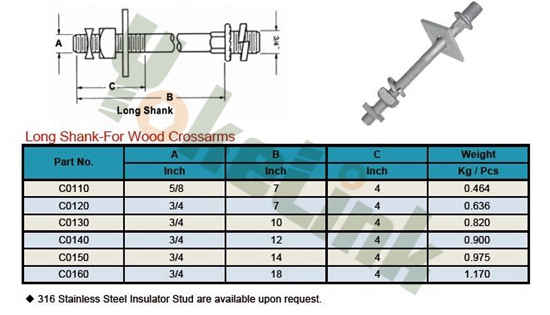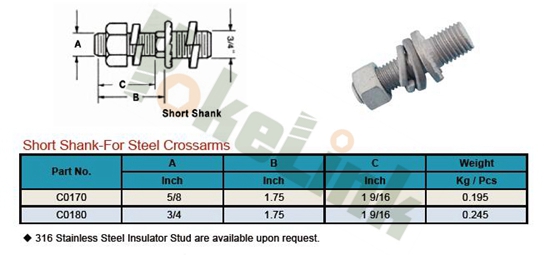
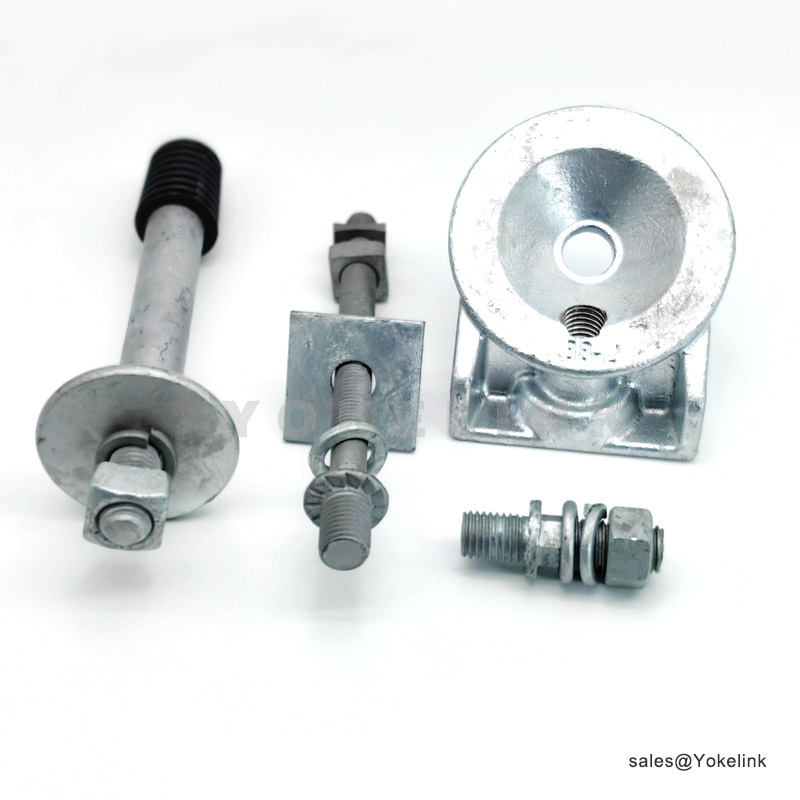
Line Post Studs
Line post studs, critical components in electrical infrastructure, are gaining attention for their role in enhancing the safety and efficiency of power transmission and distribution systems. These insulators provide structural support, electrical insulation, and mechanical stability across diverse settings. Here’s a comprehensive overview of their types, specifications, and applications.
Types of Line Post Studs
Classification By Structure
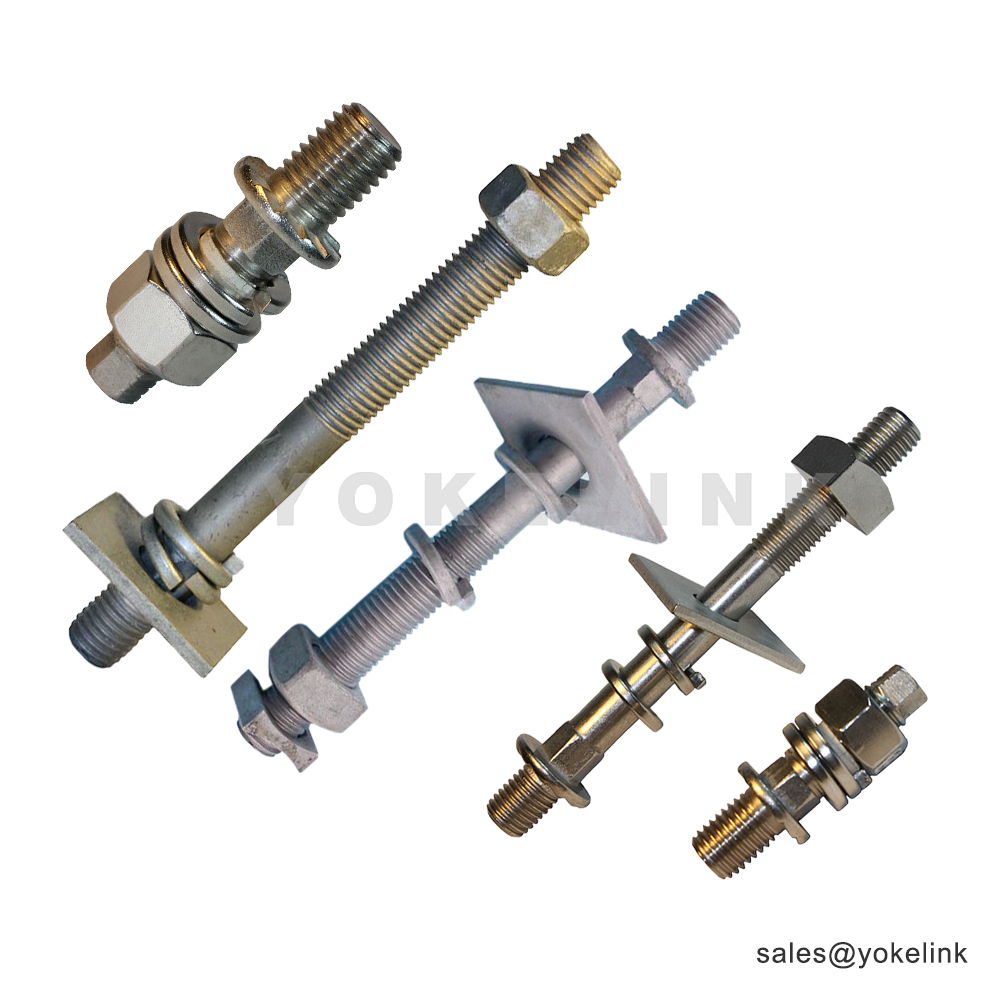
The thread lengths at both ends are equal, and both ends need to be used with nuts. They are used to connect two connected parts with through holes. They are suitable for occasions with high requirements for connection stability and symmetry, such as frame connection and pipe connection in mechanical structures.
The thread lengths at both ends are unequal, one end has a shorter thread length and is the screw-in end, and the other end has a longer thread length and is used to tighten with nuts. The length of the screw-in end depends on the material of the connected parts and the specific connection requirements. It is often used to connect a part with an internal thread hole and a part with a through hole, such as the base fixing of the equipment, the installation of accessories, etc.
Classification By Grade
The mechanical performance grade is relatively low, and it is generally used in occasions where the connection strength requirements are not high, such as the assembly of ordinary mechanical equipment and small furniture. Common materials include Q235 steel, etc., which are low in price and simple in processing technology.
have high strength and hardness, can withstand large loads such as tension, pressure and shear force, and are often used in occasions with high requirements for connection strength and reliability, such as large bridges, building structures, heavy machinery, pressure vessels, etc. Common materials include 45# steel, 40Cr, 35CrMoA, etc.
Classification By Material
Made of carbon steel, with good mechanical properties and processing properties, the price is relatively low. According to the carbon content, it can be divided into low carbon steel, medium carbon steel and high carbon steel studs. Low carbon steel studs have good toughness but relatively low strength; medium carbon steel studs have good comprehensive performance; high carbon steel studs have high strength but relatively poor toughness.
Alloy elements such as chromium, molybdenum and vanadium are added to carbon steel, which has higher strength, hardness, wear resistance and corrosion resistance. It is often used in special working environments such as high temperature, high pressure and corrosion. For example, 35CrMoA alloy steel studs are often used in chemical equipment and oil pipelines with high temperature and high pressure.
have good corrosion resistance and are not easy to rust. They are suitable for occasions with high requirements for corrosion resistance, such as food processing equipment, medical equipment, marine engineering, etc. Common materials include 304, 316, 304L, 316L, etc.
Applications Across Industries
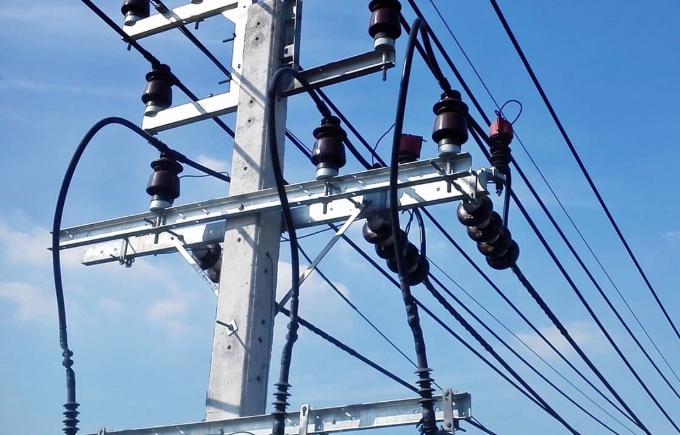
1.Transmission & Distribution Lines
Support overhead conductors and isolate them from structures like poles or towers.
2.Substations
Insulate switchgear, busbars, and circuit breakers.
3.Railway Electrification
Ensure safe insulation in overhead catenary systems for trains.
4.Renewable Energy Projects
Widely used in solar farms and wind turbines to connect renewable power to grids.
5.Industrial Facilities
Deployed in factories and mines to manage high-voltage equipment.